
Blood Flow Restriction Therapy
Blood Flow Restriction Therapy:
Can You Build Strength Without Heavy Weights?
When you’re recovering from an injury or surgery, getting stronger is an important part of getting back to the activities you enjoy. But sometimes, your body simply isn’t ready for the amount of weight or resistance traditionally used to build strength.
That’s where blood flow restriction (BFR) therapy may be able to help.
BFR is a physical therapy technique that allows patients to exercise with lighter weights while still creating a strong stimulus for the muscles. It can be particularly helpful during certain stages of rehabilitation when heavier resistance isn’t appropriate or well tolerated.
But how does it work? What does it feel like? And is BFR actually better than traditional strength training?
Let’s take a closer look.
What Is Blood Flow Restriction Therapy?
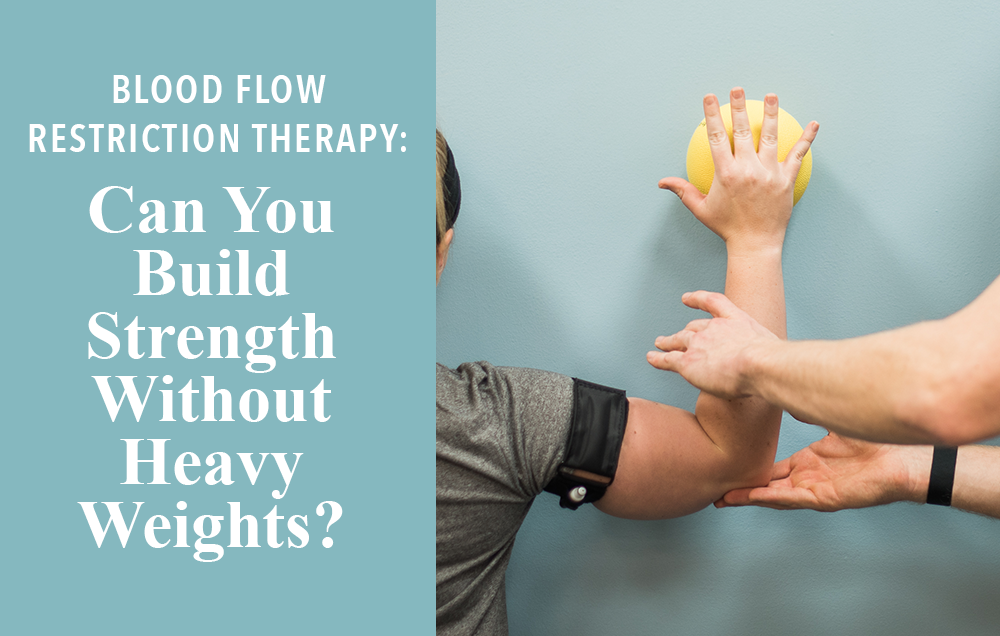
Blood flow restriction therapy uses a specialized cuff placed around an arm or leg. The cuff applies carefully controlled pressure that partially restricts blood flow to the working muscles while limiting the return of blood through the veins.
While wearing the cuff, you perform exercises using a relatively light amount of resistance—often much less than you would typically use during traditional strength training.
The muscles still have to work hard, creating a physiological response that can help stimulate strength and muscle adaptation.
One important misconception about BFR is that the goal is to completely stop blood flow. It isn’t. The amount of pressure is carefully controlled and selected for the individual patient and the equipment being used.
Why Would a Physical Therapist Use BFR?
One of the most useful applications of BFR is helping patients work on strength when heavier resistance isn’t yet appropriate.
For example, imagine you’re recovering from knee surgery. Your quadriceps have become weaker during the recovery process, but putting a heavy load through your knee may not be appropriate yet. BFR may allow your physical therapist to challenge those muscles using a much lighter resistance.
BFR may be considered for patients experiencing:
- Significant muscle weakness
- Muscle loss following surgery or injury
- A period of immobilization or reduced activity
- Difficulty tolerating heavier resistance
- Certain stages of orthopedic rehabilitation
It’s important to remember that BFR isn’t necessarily used instead of traditional strengthening. Rather, it gives your physical therapist another option for safely challenging your muscles when conventional strengthening may not be the best choice yet.
What Can You Expect During a BFR Session?
If your physical therapist determines that BFR is appropriate for you, you may be wondering what the experience is actually like.
A specialized cuff will be placed around the upper portion of the arm or leg you’re exercising. Your physical therapist will determine the appropriate pressure based on your individual circumstances and the equipment being used.
You’ll then perform specific exercises while wearing the cuff, typically using a much lighter resistance than you might expect.
You will probably feel the muscles working. In fact, the exercises can feel surprisingly challenging despite the lighter weight. You may also notice a feeling of pressure or tightness from the cuff and increased muscle fatigue.
Your therapist will monitor your response throughout the session and adjust the exercise or pressure as needed.
The cuff is generally only worn for a limited period during the exercise session. Once the exercise is complete, the cuff is released and removed.
In other words, BFR isn’t about pushing through discomfort just because you’re wearing a cuff. Your therapist is using the technique as one part of a carefully designed rehabilitation program.
Are There Any Downsides to BFR?
Like any physical therapy technique, BFR isn’t right for everyone, and there are some potential drawbacks.
The cuff can feel uncomfortable, particularly when you’re first getting used to the sensation. The muscles may also fatigue quickly during the exercises, and some patients may experience temporary muscle soreness afterward.
More serious complications are uncommon, but adverse events have been reported. That’s why appropriate screening, individualized pressure settings, proper cuff placement, and professional supervision are important.
Your physical therapist should consider your medical history, current condition, and individual risk factors before determining whether BFR is appropriate for you.
Is BFR Better Than Traditional Strength Training?
Not necessarily—and that’s an important point.
BFR isn’t designed to replace traditional strength training. Instead, it gives physical therapists another tool to use when a patient may not be ready for heavier resistance.
As you progress through rehabilitation, your program may change. You may begin with lighter exercises, potentially incorporate BFR, and gradually progress toward heavier resistance and more challenging functional activities as your body becomes ready.
The best rehabilitation program isn’t necessarily the one with the newest technique. It’s the one that’s appropriate for you, at the right time in your recovery.
Is Blood Flow Restriction Therapy Safe?
When appropriately prescribed and administered to an appropriate patient, BFR is generally considered a safe rehabilitation technique. However, safety depends on proper patient selection and application.
BFR should not be attempted at home using an improvised tourniquet, resistance band, or other device. The goal isn’t simply to restrict blood flow. The technique requires the appropriate equipment, pressure, exercise prescription, and clinical judgment.
If you’re wondering whether BFR is appropriate for you, your physical therapist can help determine whether it makes sense as part of your rehabilitation plan.
The Role of Physical Therapy
Could BFR Be Right for You?
Every recovery is different. What works well for one patient may not be the right approach for another.
If you’re recovering from surgery or an injury and need to rebuild strength but aren’t yet able to tolerate heavier resistance, BFR may be one of the tools your physical therapist considers.
At Atlantic Physical Therapy Center, our physical therapists take the time to understand your condition, your goals, and what you want to get back to doing. Your treatment plan is then designed around where you are today while helping you progress toward where you want to be.
BFR may be one part of that plan—but so are progressive strengthening, hands-on treatment, movement training, education, and the many other tools your therapist can use throughout your recovery.
Because physical therapy isn’t about using one technique. It’s about finding the right approach to help you move better, feel stronger, and get back to living fully.
If you have questions about blood flow restriction therapy or whether it may be appropriate for your rehabilitation, talk with your Atlantic Physical Therapy Center physical therapist.
Recent Comments