
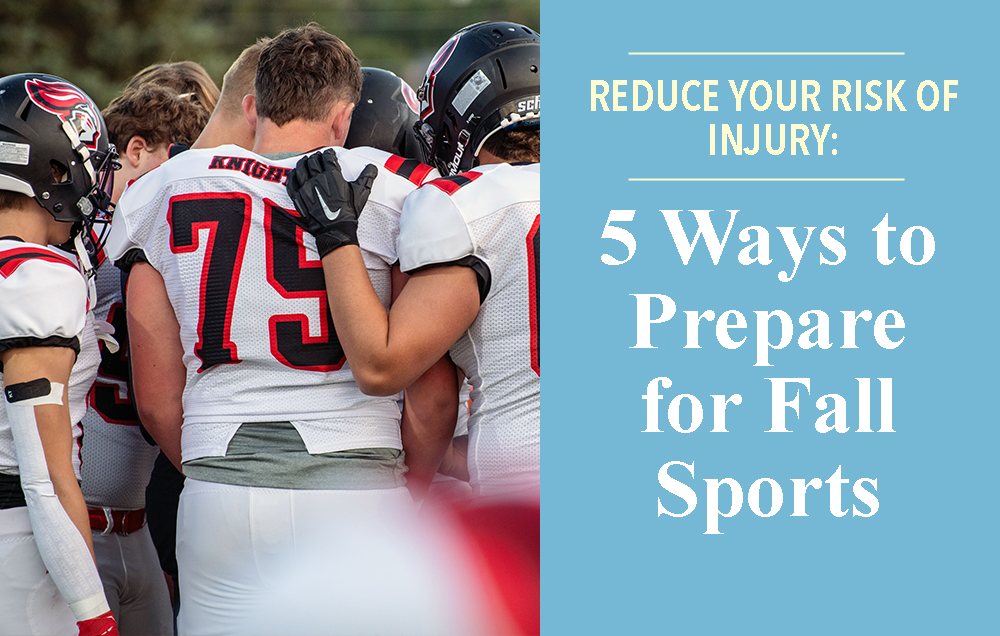
Reduce Your Risk of Injury: 5 Ways to Prepare for Fall Sports
Reduce Your Rick of Injury:
5 Ways to Prepare for Fall Sports
As summer winds down and a new school year approaches, young athletes are getting ready to return to the field, court, track, and gym. While excitement for the fall season is high, jumping back into sports after a summer away can also increase the risk of injury.
Whether your child plays soccer, football, field hockey, volleyball, tennis, or another fall sport, taking time to prepare the body before the season begins can help improve performance and reduce the risk of common sports injuries.
1. Gradually Increase Activity
Avoid going from little activity to intense practices overnight. Begin increasing activity several weeks before the season starts, gradually building up the duration and intensity of workouts.
Walking, jogging, cycling, swimming, and sport-specific drills can all help build a foundation of cardiovascular endurance before practices begin.
2. Build Strength
Strength training is an important part of sports injury prevention. Strong muscles help support the joints and allow athletes to better handle the demands of their sport.
Exercises should focus on the entire body, including the legs, hips, core, and upper body. Sport-specific strength training can also help athletes develop the power and control needed for their particular activity.
3. Don’t Forget Mobility
Adequate flexibility and joint mobility allow athletes to move efficiently and safely. Areas such as the hips, ankles, shoulders, and thoracic spine can be especially important depending on the sport.
A physical therapist can identify areas of limited mobility and recommend individualized exercises to address them.
4. Prioritize Warm-Ups and Recovery
A proper warm-up prepares the body for activity by gradually increasing heart rate, circulation, and muscle temperature. Dynamic movements and sport-specific exercises can be incorporated before practices and games.
Recovery is equally important. Rest days, proper hydration, nutrition, and adequate sleep all play an important role in helping the body adapt to increased activity.
5. Address Pain Early
One of the biggest mistakes athletes can make is trying to play through pain.
Soreness after a challenging workout can be normal, but persistent or worsening pain should not be ignored. Addressing an issue early may help prevent a minor problem from becoming a more significant injury that takes an athlete out of the season.
The Role of Physical Therapy
How Physical Therapy Can Help.
Physical therapy isn’t just for athletes who are already injured. A physical therapist can evaluate strength, mobility, balance, coordination, and movement patterns to identify potential areas of weakness or limitation before they become a problem.
For athletes returning from an injury, physical therapy can also provide a structured plan for safely returning to practice and competition.
Recent Comments