
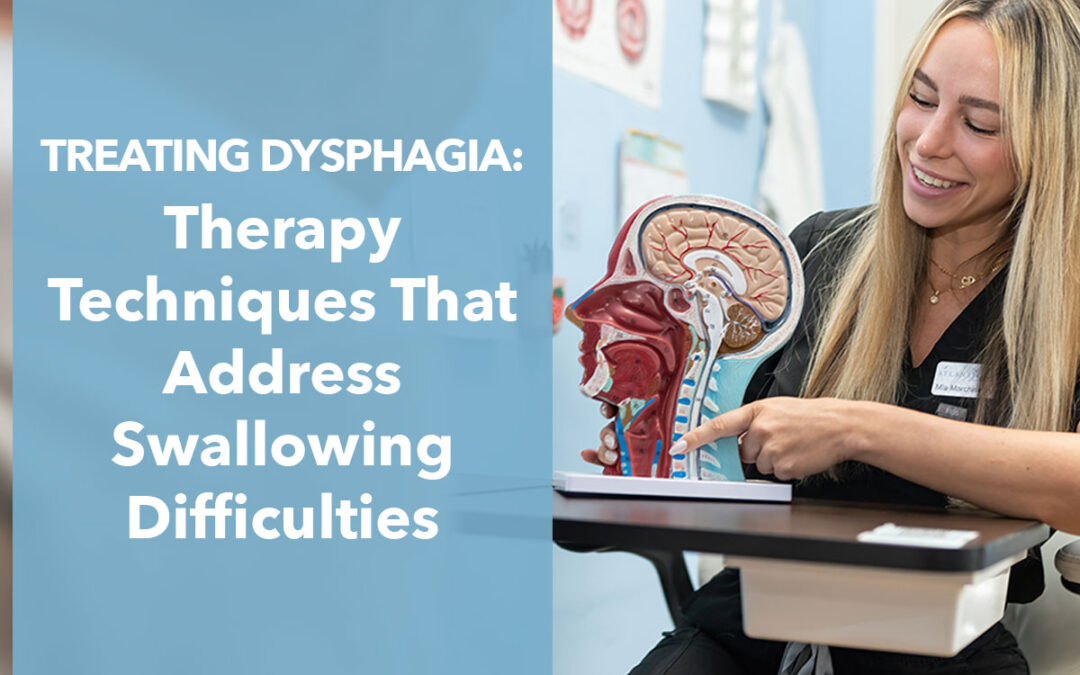
Therapy for Swallowing
Treating DYSPHAGIA:
Therapy Techniques That Address Swallowing Difficulties
Most of us swallow 500–700 times a day without ever thinking about it. Eating, drinking, and even taking medication all depend on this everyday movement. But swallowing is actually one of the most complex things the body does. It requires many muscles in the neck and throat to work together with the right strength, movement, and timing.
When swallowing becomes difficult (a condition called dysphagia) it can affect safety, nutrition, and overall quality of life.
What Causes Dysphagia?
Dysphagia can happen when the muscles involved in swallowing become weak, tight, or out of sync. Dysphagia may be caused by:
-
Stroke, Parkinson’s disease or other neurological conditions
-
Head and neck cancer or radiation treatment
-
Traumatic brain injury
-
Aging-related muscle weakness
-
Progressive neurological disorders
When swallowing is compromised, serious complications can occur including malnutrition, dehydration, aspiration (food or liquid entering the airway), pneumonia and overall reduced quality of life and social isolation. This is why early, targeted treatment is critical.
How Hands-On (Manual) Therapy Helps Swallowing
Just like stiffness in the neck or shoulder can limit arm movement, tightness, poor posture, or limited movement in the neck and throat can directly affect swallowing. That’s why therapy often includes more than just exercises. Manual therapy is a key part of treatment of dysphagia. This means using skilled, hands-on techniques to help improve movement in the areas that play a role in swallowing, including the:
-
Neck and upper spine
-
Jaw
-
Throat muscles
-
Soft tissues at the front of the neck
Hands-on treatment can help loosen tight muscles, improve movement and flexibility, reduce tension that interferes with swallowing, and improve posture needed for safer swallowing.
By improving movement first, patients are often better able to strengthen and retrain their swallowing muscles, similarly to how physical therapist help you prepare a joint for movement, before strengthening it.
Strengthening Swallowing with NMES
NMES is a therapy that helps wake up and strengthen the muscles used for swallowing. During treatment, small sticky pads are placed on the skin of the neck. These pads send gentle electrical signals that help the muscles tighten and work, similar to how muscles work during exercise.
One of the most effective ways to use NMES for swallowing is through Ampcare’s Effective Swallowing Protocol™. This is a special treatment program designed specifically to improve swallowing.
The Ampcare Protocol combines:
-
Gentle electrical stimulation to help activate swallowing muscles
-
Specific positioning to help protect the airway
-
Simple, guided swallowing exercises
The electrical stimulation helps the muscles do their job more effectively, while the exercises help retrain the brain and muscles to swallow safely again. Together, this approach supports real, lasting improvement.
Benefits of this treatment, include:
Stronger Swallowing Muscles
Weak muscles become stronger, making swallowing safer and easier.
Better Timing and Control
Therapy helps the muscles work together at the right time during a swallow.
Lower Risk of Food or Liquid Going the “Wrong Way”
Improved muscle control helps protect the airway.
Individualized Treatment
Therapy is tailored to the patient’s specific swallowing impairments.
Comfortable and Non-Invasive
Therapy is gentle, does not involve needles or surgery, and is done in an outpatient setting.
What a Swallowing Therapy Session Looks Like
Every treatment plan is personalized and may include:
-
Hands-on therapy to the neck, jaw, and throat
-
Postural guidance to support safe swallowing
-
Swallowing exercises tailored to your needs
-
Electrical stimulation with Ampcare Efecctive Swallowing Protocol™
-
Progression as strength and control improve
Therapy always focuses on real-life goals, like eating, drinking, and taking medications, but for individuals with dysphagia, the goal is more than that — it’s safety, nutrition, independence, and confidence. Swallowing therapy can help patients return to meaningful activities like dining with family, staying hydrated, and maintaining overall health.
How Atlantic Physical Therapy Can Help:
Speech Therapy is the Next Step Toward Safer Swallowing
If you or a loved one is having trouble swallowing, a thorough evaluation can help determine what’s causing the problem and how therapy can help.
At Atlantic Physical Therapy Center in Linwood, Mia Marchisello, M.S., CCC-SLP brings advanced training in manual therapy, swallowing rehabilitation, and Ampcare’s ESP™ protocol to every patient she treats. Since 2021, she has helped many individuals make meaningful improvements in swallowing safety and function.
With the right care, progress is possible.
Recent Comments